
Beyond SEO - Part 3
Part 3 of 3 in our series, Beyond SEO: Making Your Products Legible to AI. The first post made the case. The second got specific about what AI-ready data looks like and why most catalogues fall short. This one covers the channels that matter, what the engineering work actually involves, and why the same investment pays back beyond AI shopping. Check out the previous blogs here:
- Part 1: Your Product Page Is No Longer The Front Door
- Part 2: What AI-Ready Data Actually Looks Like
Beyond SEO Part III: The channels and the work
Once data is rich and typed, it has to reach the right consumers. Some channels ingest structured feeds directly. Others crawl your pages and read whatever structured data they find there. For ecommerce, feed-based channels tend to drive most transactional discovery, but page-level structure remains important for organic search and AI citations.
The channels that matter
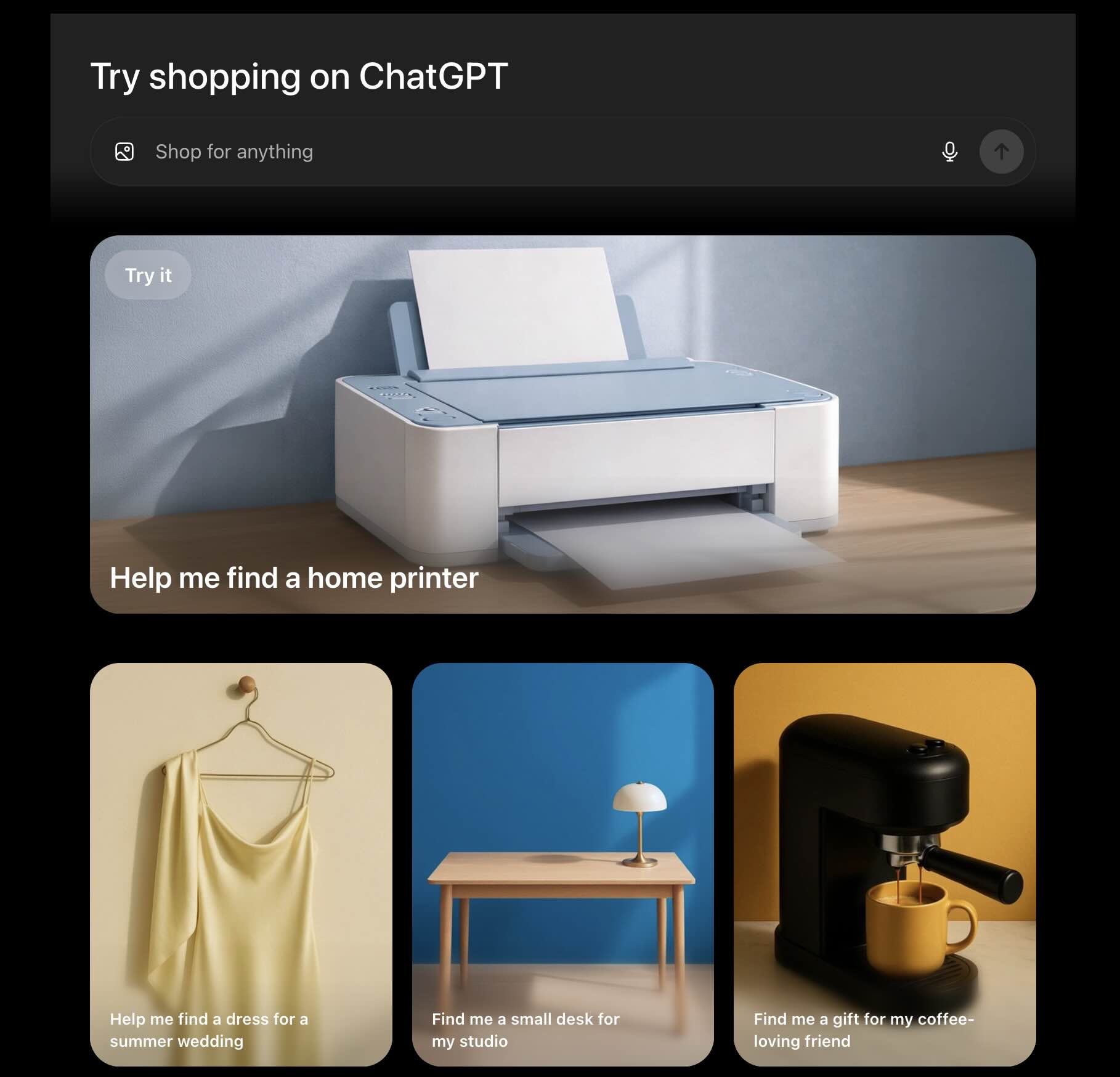 Shopping through ChatGPT is available now
A rough hierarchy for ecommerce, in order of priority.
- JSON-LD Schema on product pages. Read by Google's organic results, ChatGPT search, Perplexity, and Claude search. It is foundational and universally accessible and serves the largest existing channel (Google organic) and is the prerequisite for being legible to crawling AI systems.
- Google Merchant Center feed. Powers Google Shopping and feeds Google's broader Shopping Graph, which is also the foundation for AI Mode and Gemini's commerce experiences. The most important feed channel for most stores.
- OpenAI's ChatGPT product feed. Direct ingestion into ChatGPT Shopping. Shopify and Etsy merchants have a streamlined path. Other merchants apply via the ChatGPT merchants portal. The feed schema is documented and merchants push files via SFTP, file upload, or a hosted URL.
- MCP servers (Model Context Protocol). The agentic-commerce path. Specifically, storefront MCP servers expose tools an AI agent can call to actually shop a store. Search products, check policies, manage carts, complete checkout. Shopify ships a public Storefront MCP endpoint for every store, plus Customer Account and Checkout (preview) servers. For non-Shopify or headless setups, custom MCP servers can be built against your own catalogue APIs.
- Other partner feeds and channels. Meta and Bing catalogue feeds, Pinterest, marketplace channels. Each has its own attribute requirements.
- Open Graph product tags, Storefront API exposure, sitemaps, content schemas. Supporting layers that fill gaps and hedge against changes in how AI consumers ingest data.
To address all these channels, aim for a strategy that populates structured data once, which is then fanned out to many channels. Metafields (or proper Product Information Management systems) become the source of truth, and each channel pulls from it. Without that discipline, every channel needs its own bespoke data work, and they tend to drift out of sync.
What this actually requires
Closing the AI gap is more a data engineering project than a content project. It typically has five parts.
-
Audit Pick representative AI shopping queries for your category. List the constraints. Identify which are satisfied by structured data today and which live only in copy or nowhere. The output is a prioritised gap list.
-
Model Define the metafields, attribute types, and controlled vocabularies needed to close the gaps. Use platform standards wherever they exist. Shopify's standard metafield definitions, Google's product taxonomy and Merchant Center attributes, Schema.org's structured types, and so on. Custom attributes are sometimes necessary, and they do not propagate to feeds or AI systems automatically. Every custom field becomes work to map later.
-
Backfill Get data into the model. For small catalogues, manual editing or CSV imports can work. For larger catalogues, this typically requires data pipelines. Pulling from supplier feeds, manufacturer APIs, ERP systems, and existing PIMs. Mapping to the model. Keeping it in sync.
-
Expose For each consumer channel, configure the mapping. Custom JSON-LD that reads metafields. Merchant Center feed mapping. OpenAI feed configuration. Storefront API metafield exposure. MCP server endpoints if relevant. None of this happens automatically. It is plumbing that has to be built and maintained.
-
Validate and monitor Each channel has tooling to confirm the data has landed correctly. Google's Rich Results Test for JSON-LD parsing. Merchant Center diagnostics for feed acceptance. OpenAI's merchant portal for feed validation. Shopify's Storefront API for confirming metafield exposure. Search Console for product snippets in Google results. And critically, test real AI shopping queries against the resulting catalogue and check that the right products surface.
Steps 3 and 4 are typically where projects stall, and where engineering depth matters most. A thoughtful audit can be really beneficial here. A pipeline that keeps hundreds of SKUs accurately attributed across supplier changes, seasonal updates, and new product launches is a software engineering problem.
A foundation that pays back beyond AI shopping
The commercial case for this work does not rest on AI shopping alone. The same structured catalogue that makes you legible to AI agents also enables much sharper internal analytics, and for many businesses this second payoff is where the work earns its money.
When attributes like colour, material, size system, fit, and care instructions are typed and consistent rather than buried in product copy, sales data becomes easy to analyse. You can finally answer questions like which materials drive disproportionate returns, or which product attributes carry the strongest margin once returns and discounts are factored in. Marketing teams get cleaner segmentation, merchandising teams get faster trend signals and Operations get clearer demand patterns at the variant level. The data model that wins in AI shopping can and will power some serious analytics and most of the cost is in building it once and setting up systems that make it easy to keep this data updated and fresh.
What this means for your business
If you sell products online, the gap between catalogues that are AI-ready and catalogues that are not looks set to widen. Early movers can build some significant advantage. They get cited, ingested, recommended, and transacted with by AI agents while less-prepared competitors are harder to find on these channels. The cost of catching up later is likely to be higher than the cost of preparing now.
Even if AI shopping evolves more slowly than expected, the work does not go to waste. The same structured catalogue that wins on AI channels is what powers serious analytics, sharper merchandising, and better operations. The double benefit of building this catalogue of metadata means that it's a win-win for businesses.
If you want to know how AI-ready your catalogue actually is, get in touch. We help businesses model product data, build the pipelines that keep it clean, and connect catalogues to the channels that matter.